

Event Details
- 05 Sep 26 10:00 - 05 Sep 26 17:00
- Conference
- RAF Club, 128 Piccadilly, London W1J 7PY
Bookings now open
The Gallipoli Association 2026 Annual Conference will again take place at the prestigious RAF Club, 128 Piccadilly, London, W1J 7PY. For the 111th anniversary of the Gallipoli Campaign.
New: Download a PDF of the Conference Programme here.
This is a great opportunity to hear notable speakers, network with fellow members and other attendees, and purchase books and items from the QM store.
The event
Both the Conference and Dinner are open to non-members and their guests.
Booking forms can be downloaded here:
Booking form — PDF with fillable fields
The RAF Club is located on the north side of Piccadilly. The nearest underground stations are Hyde Park Corner (Piccadilly line) or Green Park (Piccadilly, Jubilee and Victoria lines).
Enquiries to Hester Huttenbach at [email protected]
Speakers
This year we are excited to announce six keynote speakers covering a wide range of Gallipoli topics.
Andrew Choong | Royal Navy Submarine Operations 1915–16: A Gallipoli and Dardanelles perspective |
Lucy Betteridge-Dyson | Carrying the Campaign: Mules and the AVC at Gallipoli |
Peter Hart & Warren Smith | Letters from Gallipoli and More ... |
Stephen Snelling | 'Phew this looks like being some scrap!' |
Robert Fleming | The Air War Beyond the Western Front: Eastern Theatres and the Australian Flying Corps |
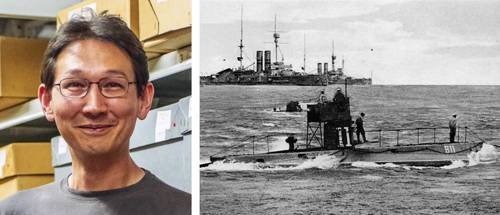
Speaker: Andrew Choong
Talk Title: Royal Navy Submarine Operations 1915-1916: A Gallipoli and Dardanelles perspective
On 13 December 1914, Lieutenant Norman Holbrook in HMS B11 torpedoed and sank the Ottoman warship Messudieh in the Dardanelles. Holbrook's success demonstrated the practicability of conducting further operations in the Straits, and of expanding their reach as more modern submarines were made available. The commencement of the Gallipoli campaign provided a focus for further efforts in this theatre, ultimately involving many more submarines and leading to the exploits of commanders whose names and ships’ companies have since become legends - Stoker, Boyle, Nasmith and others.
This talk explores the operations of British (with one Australian) submarines and their French allies in the Dardanelles and Sea of Marmara, examining their strategic ambitions against the backdrop of other commitments in the Mediterranean and opposing German submarine activity. In addition to assessing the impact of the submariners' extraordinary efforts in the face of mines, countermeasures, and currents, it will also consider the opportunities and limitations of the technology of the day, as experienced by the men who had to use it.
Andrew Choong has been a Curator of Historic Photographs, Ships Plans and Technical Records at Royal Museums Greenwich for more than 20 years. Managing a wide range of collections, he is a regular conference speaker and contributor to media, including History Hit with Dan Snow, PBS in the US and multiple podcasts. He has broad maritime research interests, but in particular the Royal Navy, US Navy and Imperial Japanese Navy during the period 1860 to 1945. His focus on major 20th century naval battles includes curation of “Jutland 2016: WW1’s Greatest Sea Battle” (National Maritime Museum, 2016-18) and in WW2 studies of the sinking of the Bismarck, and D Day. His first book, ‘Armoured Cruiser Cressy’ is a detailed technical analysis of the Royal Navy cruiser HMS Cressy, whose sinking by U9 on 22 September, 1914 foreshadowed the extensive impact of submarines in 20th century warfare. Andrew is an Honorary Vice President of the World Ship Society, and holds a Masters Degree in Maritime Archeology (Southampton University).
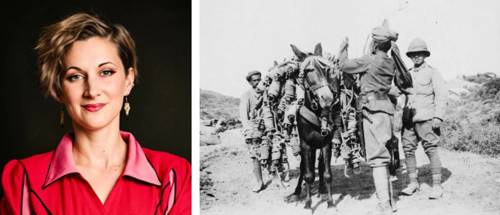
Speaker: Lucy Betteridge-Dyson
Talk Title: Carrying the Campaign: Mules and the AVC at Gallipoli
The mules and donkeys who served at Gallipoli have largely been reduced to a handful of individual stories and myths. Yet their contribution was far broader and more significant - carrying ammunition, water, and wounded men across terrain that defeated motor transport, underpinning operations at every level of the campaign.
Drawing on military and animal history, this talk explores the work of these equid soldiers alongside the Army Veterinary Corps who kept them in the field, arguing that the campaign cannot be fully understood without them.
Lucy Betteridge-Dyson is a historian, author and broadcaster specialising in twentieth-century conflict and the role of animals in warfare. She is currently a PhD candidate at King’s College London researching equine agency and the use of equines in the British Army between 1918-1945. Her work combines military history with animal studies to explore the often overlooked contributions of horses, mules and other animals in military systems.
Alongside her academic research, Lucy works as a historical expert and presenter, appearing on programmes for the BBC, Channel 4, National Geographic and PBS. She is the author of ‘Jungle Commandos: The Battle for Arakan, Burma 1945’ (Osprey, 2025).
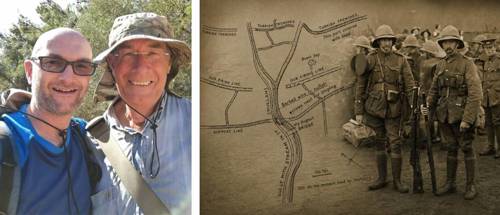
Speaker(s): Peter Hart and Warren Smith
Talk Title: Letters from Gallipoli and More ...
Letters from Gallipoli, written by Patrick Maitland Campbell of the Ayrshire Yeomanry, was published in 1916 while the First World War was still being fought. Long out of print, it has become a scarce and often expensive book.
Recognising its historical importance, Outline Publishing has republished the work for modern readers. Enhanced with additional research and accounts from other members of the Ayrshire Yeomanry, this new edition provides a richer and more complete picture of the regiment's experiences during the Gallipoli Campaign.
Peter Hart was, and on occasion still is, an Oral Historian at the Imperial War Museum and is the author of many acclaimed First and Second World War histories, including The Great War, Gallipoli, Burning Steel, and At Close Range.
Warren Smith is a frequent visitor to the Gallipoli battlefield and a member of the Gallipoli Association's Helles Battlefield Study Project. He was voted in as a Trustee of the Gallipoli Association in October 2024.
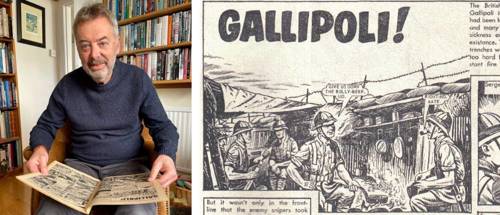
Speaker: Stephen Snelling
Talk Title: ‘Phew this looks like being some scrap!’
Bob Millar was Gallipoli’s own comic-strip superhero. Forever in the thick of things, he was the campaign’s ultimate survivor: from the V Beach landings to the fight for Sari Bair Ridge and the extraordinarily successful evacuation in which he played a key but overlooked role. He even managed to find his way aboard the submarine E11 for its audacious foray into Constantinople harbour. Steve Snelling unpicks the remarkable story behind a childhood inspiration who contrived to straddle fact and fiction.
Steve Snelling is the author of two books on the Gallipoli campaign, the VCs of Gallipoli and The Wooden Horse of Gallipoli. As a Norwich-based journalist, he has had a long-standing interest in the ill-starred services of the Norfolk Regiment’s territorial battalions on the Peninsula. Currently taking a break from First World War related projects, he is engaged in writing an account of two little-known escape line pioneers who helped blaze a trail for hundreds of evaders during the Second World War.
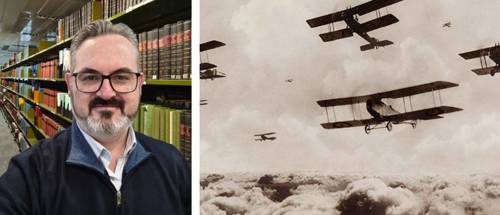
Speaker: Rob Fleming
Talk Title: The Air War Beyond the Western Front: Eastern Theatres and the Australian Flying Corps
Aviation emerged as one of the most dynamic and transformative elements of the First World War (1914–1918), evolving in just a few years from fragile reconnaissance platforms into a decisive combat arm. Initially tasked with observation and artillery spotting, aircraft soon took on increasingly complex roles—ground attack, bombing, and, crucially, the fight for aerial superiority. Control of the skies became inseparable from control of the battlefield below.
While the Western Front witnessed the most intense air fighting, the significance of air power extended far beyond Europe. In the Middle Eastern theatres, its value was magnified by vast distances and fluid, open warfare. During the Dardanelles Campaign, aviation—largely driven by the Royal Naval Air Service—played a limited but innovative role in reconnaissance, artillery direction, and early bombing efforts, including operations from the pioneering seaplane carrier HMS Ark Royal. It was, however, in the sweeping campaigns across Sinai, Palestine and Mesopotamia that air power came into its own.
Alongside their counterparts in the Royal Flying Corps and Royal Naval Air Service, the Australian Flying Corps helped shape the evolution of aerial warfare in the Middle East, proving that mastery of the air was not merely an adjunct to war on land, but a decisive factor in its outcome.
Rob Fleming is the Principal Maps Records Specialist at The National Archives. He is a social and military historian specialising in the history of empire, cartography, and intelligence. Educated at the University of Tasmania and the University of Sydney, he has developed a career spanning roles at the Imperial War Museum and the National Army Museum, where he led the Templer Study Centre and built extensive expertise in military records, maps, and visual culture. He is a Fellow of the Royal Geographical Society and member of the British Cartographic Society and has served on the Council of the Society of Army Historical Research.
Rob combines academic research with wide-ranging public engagement, contributing regularly to lectures, conferences, and commemorative programmes. His work explores how maps and visual materials shaped imperial strategy, warfare, and identity, with particular interest in colonial and Commonwealth contributions to military history. He has previously published twice on the First World War, and his forthcoming book Scholars, Soldiers and Spies examines the intersections of cartography, intelligence, and empire.