
31 August 1915
HELLES - The Reverend J.K. Best, Senior Chaplain to the Forces, had just returned to the peninsula 4 days prior after spending five weeks in Alexandria and then Cyprus recovering from Enteritis. On August 31, Reverend Best buried Private Cephas Turner, C Company, 1/9th Battalion Manchester Regiment, 126th Brigade, 42nd East Lancs Division who had died of wounds the previous day.
Cephas Turner was just 19 years old. Born in Stockport in 1896 he was the son of Joseph & Mary Ann Turner (née Chatterton). By 1911 Cephas was 15 years old and working as an errand boy for the railway. The family had moved to Ashton under Lyne and Cephas lived with his mother, older sister and younger brother on Bank Street.
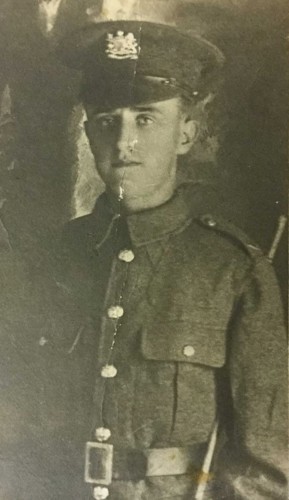
On Monday March 17, 1913, shortly after his 17th birthday, he joined the 9th Battalion Manchester Regiment in Ashton. He deployed to Egypt in September 1914 where the battalion drilled and trained with long desert marches and brigade and divisional exercises. He landed with the 9th Manchesters at Cape Helles on May 9, 1915. On 19 August the battalion, out of the line, moved to a new bivouac at Gully Beach. Six days later they moved back to the line.
The day after his burial his mother received a letter from him written while he was at Gully Beach:
"We are now on the beach. There are some monitors here. It is fine here to see the naval guns firing when the shells light on the hill Achi Baba. It is like a cauliflower in shape, but of course, of a different size."
And around a month later she received official word of his death, as reported by the local newspaper:
ASHTON TERRITORIAL'S FATE.
Mrs. S. Turner, of 7, Delamere Street, Ashton, and formerly of 3, Bank Street, has received official information that her son, Pioneer Private Cephas Turner, died on August 30th from wounds received during the fighting in Gallipoli. Private Cephas Turner was in the 1/9th Manchester Regiment, and was a member of the Ashton Territorials for about 18 months before the outbreak of hostilities.
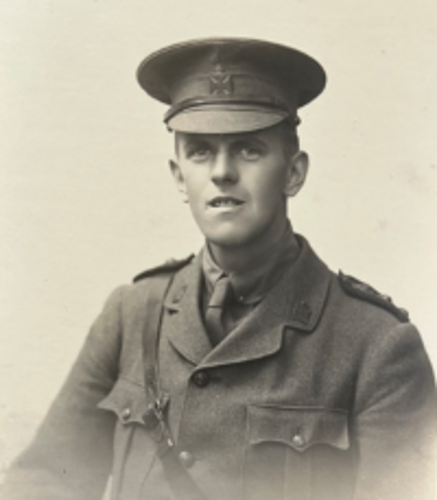
The Reverend J.K. Best, CF
Best's return to Gallipoli did not last long. Less than 3 weeks after his return he found himself onboard the Hospital Ship Gascon, anchored off Mudros awaiting transfer to the Ausonia, suffering from dysentery. In a letter to his father dated 25 September he opined about his situation:
My dear father,
I never felt so fit in my life as I do at the present moment. I cannot understand it. I am still in the grip of dysentery but thanks to the excellent work of ipececuana [ipecacuanha] pills (I don’t know the correct spelling) and emetine injections, my interior is quite comfy. Emetine is the active principle of ipec… (that beastly word again). I had four pills, two injections and several draughts of bismuth, etc. I put etc. because I don’t know what the other ingredients are. I don’t by any means feel a suitable candidate for a month or two’s leave but we will see what we will see. It is a fraud[ulent] thing to be an invalid and not to feel an invalid.
There is a delightful and fascinating uncertainty about this active service mode of existence. It relieves one of quite a load of conscious thought. You cannot take thought for the morrow because not knowing where you are likely to be, or doing, you cannot lay plans for the future. I shall cut down my forethought to a minimum if I get through this thing; it saves so much mental energy. The Col. Indian Medical Service has just been in. He booked me down for the Ausonia. 300 are to go on to the Ausonia. The rest onshore. The Ausonia is bound for home. Hearing this, my inside and general feeling of fitness forced me to tell him I hardly felt the right man to be invalided home. Therefore, I don’t know what will happen. I gather now that I am for home but whether that means just a sea voyage there and back with perhaps a few days in Hospital or Convalescent ward or whether it really means what it says, ‘home’ I cannot say.
In fact, his orders were changed at the last minute and Best disembarked at Malta a few days later and was admitted to the Cottonera Hospital. He did not return to Gallipoli during the remainder of the campaign.
OTHER SOURCES:
Ashton Reporter, "Ashton Territorial's Fate", Saturday 02 October 1915.
Roynon, G. (Ed.). (2011). A chaplain at Gallipoli: The Great War diaries of Kenneth Best.
SOURCE:
Private Papers of Reverend J K Best MC CF, IWM. https://www.iwm.org.uk/collections/item/object/1030011547